
Stationary drone detection and jamming all in one device
€1.00
Passive Detection: Passively receives signals, does not emit any electromagnetic signals, able to detect drone model and its electronic fingerprint.
Direction Finding Accuracy: Accurately determine the UAV’s intrusion direction and indicate the target.
Identification Accuracy: Accurately identify different drones of the same brand, same model, and same frequency band.
Precise Defense: Designate to jam any one of the two drones;
Full-autonomy Mode: 24-hour automatic detection and alarm, no need of personnel on duty
Combined Defense: combination of narrowband, frequency hopping, low-power precise defense and wideband high-power jamming;
Black & White List: Able to mark the drone into black and white list with a single click, and the white list drone does not alarm.
Model Library: Support all DJI models, mainstream brands, DIY drones. Cover more than 98% of drone models on the market
Passive detection
| Support Frequencies | 30MHz—6GHz full bands detection Key detection frequency bands:433MHz\900MHz\1.4GHz\2.4GHz\5.2GHz\5.8GHz (customizable) |
Detection Range | 3km, 5km, 8km | |
Detection Sensitivity | ≥ -95dBm(25kHz) | |
Direction Finding Accuracy | Moving ≤ 10°, Hovering ≤ 3° | |
Direction Directivity | 360°Omnidirectional | |
Adaptable communication modulation method | FM, 2FSK, 4FSK, GFSK, MSK, BPSK, QPSK, 16QAM, 64QAM, OFDM, DSSS, FHSS | |
Simultaneous Detection | ≥30 drones | |
Wideband Jamming | Supported frequencies | 2.4G, 5.8G, 1.5G (Other frequency bands can be customized) |
Jamming range | 2kn,3kn | |
Precise defense | Supported frequencies | 2.4G,5.8G |
Defense range | 2km,3km | |
Equipment specification | Demensions | 410mm×330mm×190mm (length×Width×Thickness) |
Weight | 25.8kg |
Model | Detection Distance | Wideband Jamming Distance | Precise Strike |
DFJ32 | 3KM | 2KM | 2KM |
DFJ53 | 5KM | 3KM | 3KM |
DFJ83 | 8KM | 3KM | 3KM |

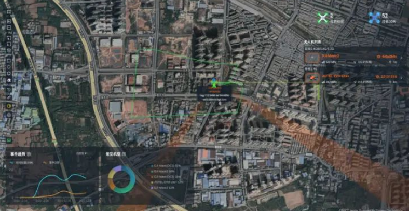
Drone detection radar is an advanced surveillance system designed to identify, track, and monitor unmanned aerial vehicles (UAVs) in various environments. It operates by emitting radio waves and analyzing the reflected signals from drones to determine their position, speed, altitude, and flight trajectory. This technology is widely used in airports, military bases, critical infrastructure, public events, and border security to enhance airspace safety and prevent unauthorized drone activities.
Modern drone detection radar systems are capable of detecting both small and large drones at long distances, even in complex environments or adverse weather conditions. Many systems are integrated with additional technologies such as electro-optical sensors, infrared cameras, and RF signal detection to improve accuracy and reduce false alarms. These multi-sensor solutions provide comprehensive situational awareness and enable operators to respond quickly to potential threats.
Drone radar systems often feature real-time monitoring interfaces, automated alert functions, and data recording capabilities, allowing security personnel to analyze flight patterns and make informed decisions. Some advanced models support network integration and remote control, making them suitable for centralized security management systems. With the rapid growth of drone usage worldwide, drone detection radar has become an essential tool for maintaining airspace security and protecting sensitive locations.